
What is Pangasius Fish Vietnam?
Pangasius Fish Vietnam refers to Pangasius hypophthalmus, commonly known as swai fish, a freshwater species widely farmed in Vietnam’s Mekong Delta and exported globally as frozen white fish fillets.
This species belongs to the catfish family and is recognized for its mild taste, white flesh, and competitive pricing, making it one of the most popular imported fish worldwide. For global seafood buyers, Pangasius Fish Vietnam has become a strategic product due to its stable supply, scalable farming system, and export-ready processing infrastructure.
Unlike many wild-caught species, pangasius is fully farmed, allowing importers to benefit from consistent quality, controlled production, and year-round availability. This is a major advantage in today’s global seafood trade where supply stability is critical.
From a commercial perspective, swai fish Vietnam is widely used in:
- Retail frozen fillet programs
- Food service chains
- Institutional catering
- Processed seafood products
👉 For a complete overview of pangasius sourcing and export from Vietnam, read our ultimate guide: → Pangasius Export from Vietnam – Complete Guide for Global Seafood Buyers
👉 If you are new to sourcing seafood from Vietnam, you can explore more insights in our pillar guide:
Seafood Export from Vietnam – Complete Guide for Global Seafood Buyers
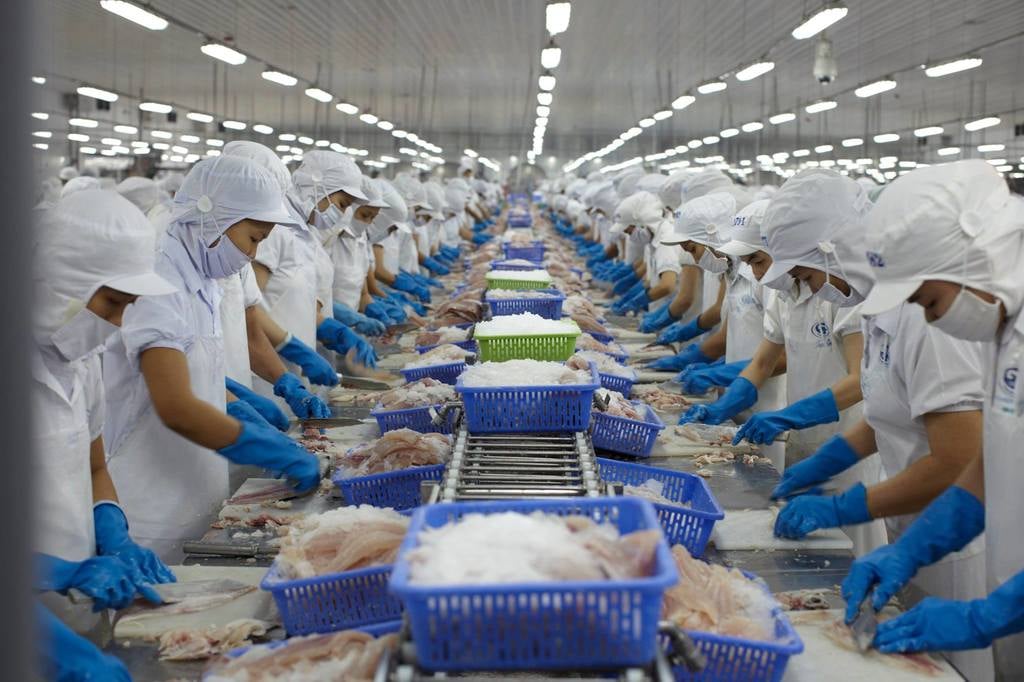
Pangasius Fish Vietnam fillet for export
Pangasius Farming in Vietnam – Scale, Technology & Sustainability
Vietnam is the world’s leading producer and exporter of Pangasius Fish Vietnam, with annual production exceeding 1.6 million tons, primarily concentrated in the Mekong Delta provinces such as Dong Thap and An Giang.
Industrial-Scale Farming System
The success of Pangasius Fish Vietnam lies in its highly controlled aquaculture model, including:
- Intensive pond farming (high-density stocking)
- “All-in / all-out” production cycles (6–8 months)
- Controlled feeding using industrial feed
- Selective breeding for fast growth and disease resistance
Fish can reach 0.8–1.2 kg per piece, ideal for fillet processing and export.
Advanced Technologies
Modern farms in Vietnam apply:
- RAS (Recirculating Aquaculture Systems)
- “River-in-pond” systems with water circulation
- Aeration and sludge removal systems
These technologies help:
- Maintain water quality
- Reduce disease risks
- Improve sustainability
International Certifications
To meet global market requirements, Pangasius Fish Vietnam production complies with:
- ASC (Aquaculture Stewardship Council)
- BAP (Best Aquaculture Practices)
- GlobalG.A.P
- VietGAP
👉 This ensures food safety, traceability, and environmental responsibility — critical for EU, US, and premium markets.
For updated industry insights, you can refer to:
👉 https://vietfishmagazine.com/pangasius
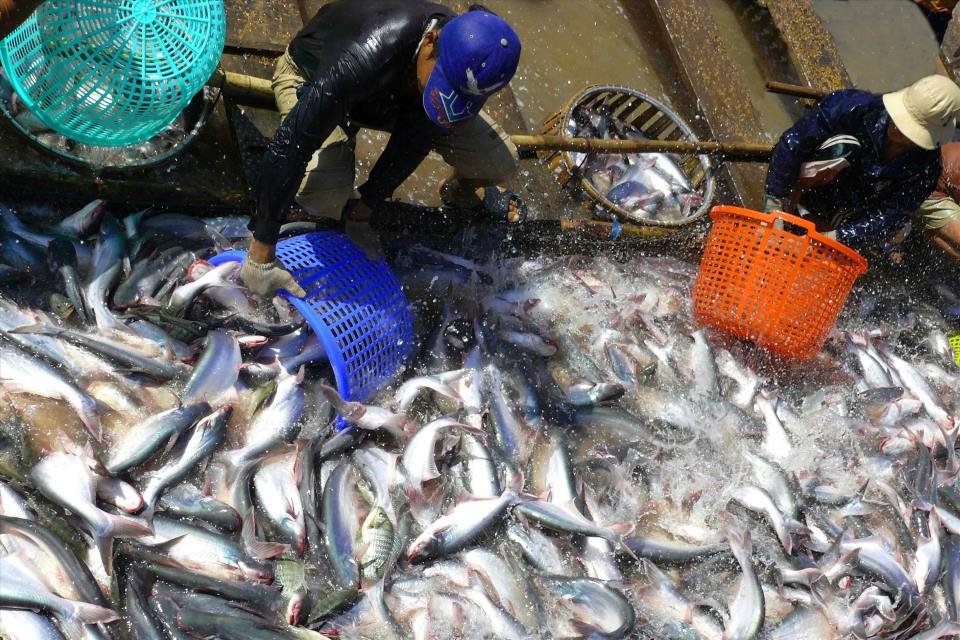
Pangasius Fish Vietnam aquaculture system
Pangasius Fish vs Tilapia – Key Differences for Importers
When sourcing white fish, buyers often compare Pangasius Fish Vietnam with tilapia. Understanding the differences helps optimize product selection and pricing strategy.
Cost Efficiency
One of the biggest advantages of Pangasius Fish Vietnam is its competitive pricing. Compared to tilapia, pangasius typically offers:
- Lower cost per kg
- Better yield after processing
- More stable supply
👉 This makes it ideal for large-volume buyers.
Taste & Texture
- Pangasius: mild, slightly sweet, soft texture
- Tilapia: firmer texture, slightly earthy taste
Because of its neutral flavor, swai fish Vietnam adapts well to various cuisines and sauces.
Fillet Appearance
- Pangasius: larger fillet, white to light pink
- Tilapia: smaller and thinner fillet
👉 Pangasius provides better portion control for food service.
Farming & Origin
- Pangasius: concentrated in Vietnam (Mekong Delta)
- Tilapia: farmed globally
👉 While tilapia offers diversification, Pangasius Fish Vietnam offers stronger supply chain control and specialization.
Sustainability Consideration
Certified Pangasius Fish Vietnam from ASC/BAP farms is considered highly sustainable, with increasing transparency in farming practices.
Pangasius Fillet Specifications – Sizes, Cuts & Processing
Understanding product specifications is essential when sourcing Pangasius Fish Vietnam.
👉 You can explore detailed product options here:
Our Pangasius Products
Common Fillet Types
- Well Trimmed (premium, no fat, no red meat)
- Semi Trimmed
- Untrimmed
- Portion Cut
Size Range (grams per fillet)
- 60–120g
- 120–170g
- 170–220g
- 220–300g
- 300g+
👉 Size consistency is critical for retail and food service buyers.
Glazing Options
- 0% (natural)
- 10%
- 20%
- Custom glazing
Glazing helps protect fillets during freezing and transport.
Processing Methods
- IQF (Individually Quick Frozen)
- Block frozen
- Vacuum packed
Packaging Options
- Bulk carton (5kg / 10kg)
- Retail packing (printed bags)
- Custom OEM packaging
👉 Flexible processing makes Pangasius Fish Vietnam suitable for diverse market requirements.
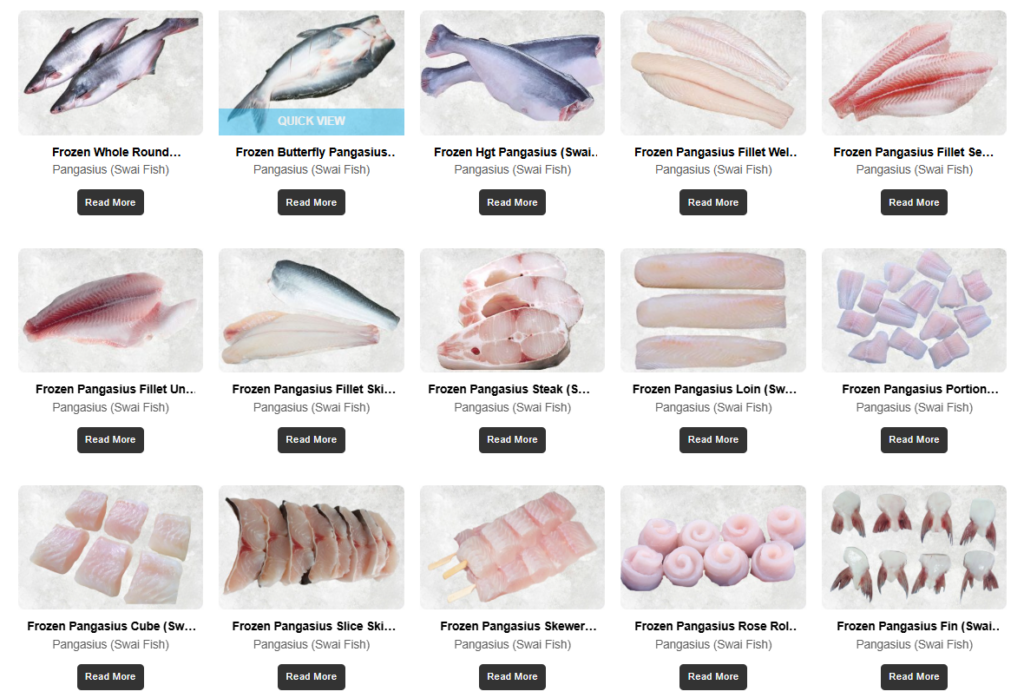
Pangasius Fish Vietnam fillet specifications
Global Pangasius Market – Demand & Opportunities
Pangasius Fish Vietnam dominates the global market, supplying to over 140 countries.
Top Import Markets
- China & Hong Kong – largest volume market
- United States – high-quality fillet demand
- EU – strict standards, premium segment
- Brazil – fast-growing market
- CPTPP countries (Mexico, Canada, Japan)
Market Trends
- Increasing demand for affordable white fish
- Growth of value-added products (breaded, portioned)
- Rising requirements for certification & traceability
- Expansion in emerging markets
👉 Export growth is expected to continue at 5–10% annually, driven by global protein demand.
Why Pangasius Fish Vietnam is a Strategic Choice for Importers
For seafood buyers, Pangasius Fish Vietnam offers a unique combination of advantages:
Stable Supply
Vietnam’s large-scale farming ensures year-round availability.
Competitive Pricing
Lower production costs compared to many white fish species.
Flexible Processing
Wide range of:
- Cuts
- Sizes
- Packaging
Export Expertise
Vietnam has decades of experience exporting pangasius globally with:
- Professional logistics
- Complete documentation
- Reliable delivery
Challenges & Considerations
While Pangasius Fish Vietnam is highly competitive, importers should also consider:
- Feed cost fluctuations
- Disease management in high-density farming
- Increasing regulatory requirements
👉 Working with trusted suppliers and QC-controlled sourcing is essential.
Conclusion – Sourcing Pangasius Fish Vietnam for Long-Term Success
Pangasius Fish Vietnam has evolved into one of the most important seafood commodities globally, thanks to its scalability, affordability, and adaptability.
For importers, it represents a high-margin, stable, and versatile product suitable for multiple distribution channels.
Whether you are entering the seafood market or expanding your product portfolio, swai fish Vietnam is a strong strategic choice.
Contact Us – Trusted Pangasius Supplier from Vietnam
If you are sourcing Pangasius Fish Vietnam, we are ready to support you with:
- Reliable factory network
- Strict QC inspection
- Competitive pricing
- Flexible packing solutions
Seafood Link VN
📧 [email protected]
🌐 https://seafoodlinkvn.com
📱 WhatsApp: +84 933 113 379
👉 If you are sourcing pangasius, explore trusted suppliers in Vietnam and contact us today for quotation.
We look forward to building long-term partnerships with seafood buyers worldwide seeking reliable seafood products from Vietnam.
